A few years ago, if you’d mentioned lab grown diamonds at a dinner party, you might’ve been met with polite smiles and a few sceptical glances. “Aren’t those fake?” someone would ask, and you’d have to awkwardly explain that, no, they’re not cubic zirconia or crystals—they’re chemically identical to mined diamonds.
Now, things have changed. Fast.
These days, loose lab created diamonds are being discussed in design studios, featured in bridal magazines, and even considered by traditional jewellers who once swore they’d never sell anything but “the real thing.” And honestly? I think it’s one of the most interesting shifts the jewellery world’s seen in decades.
Table of Contents
The Rise of the Conscious Sparkle
As someone who’s spent the better part of ten years writing about jewellery and ethical fashion, I’ve watched consumer awareness evolve dramatically.
A decade ago, most people didn’t think twice about where their diamonds came from. The Kimberley Process, conflict-free certifications—it all felt distant and complicated. But times have changed.
Shoppers today are more conscious, better informed, and far more values-driven. They want transparency and sustainability. They want to know that what they’re wearing doesn’t come at a human or environmental cost. And that’s exactly where lab created diamonds have stepped in—quietly, confidently, and with a bit of sparkle.
Unlike mined diamonds, which can come from complex global supply chains, lab grown stones are made in highly controlled environments using advanced technology. There’s no large-scale mining, no displaced earth, and no ethical ambiguity. Just science and craftsmanship working hand in hand.
Loose Lab Created Diamonds”?
Let’s strip away the jargon for a second.
When jewellers talk about loose lab created diamonds, they’re referring to individual, unmounted stones—diamonds that haven’t yet been set into a ring, necklace, or earrings.
It’s a bit like buying a piece of art directly from the artist before it’s framed. You’re getting the raw brilliance, the untouched potential.
These diamonds are created using one of two main technologies: HPHT (High Pressure, High Temperature) or CVD (Chemical Vapour Deposition). Without diving too deep into the science, both processes mimic the natural conditions under which diamonds form underground—only it happens in a lab rather than over millions of years beneath the earth’s crust.
The result? A diamond that’s optically, chemically, and physically identical to one that’s been mined. Even trained gemologists often can’t tell them apart without specialised equipment.
The Beauty of Buying Loose Stones
There’s something deeply personal about choosing a loose diamond.
When you’re buying a finished ring or necklace, you’re accepting someone else’s design decisions—the cut, the setting, the metal, the proportions. But when you start with a loose stone, you’re creating something from the ground up. It’s your taste, your story, your vision.
That’s why more people are turning to specialists who offer loose lab created diamonds. It allows them to handpick the exact stone that speaks to them—size, cut, colour, clarity—and then work with a jeweller to design a completely unique piece.
Whether it’s a minimalist solitaire engagement ring, a vintage-style pendant, or a modern stackable band, starting with a loose diamond gives you total creative control.
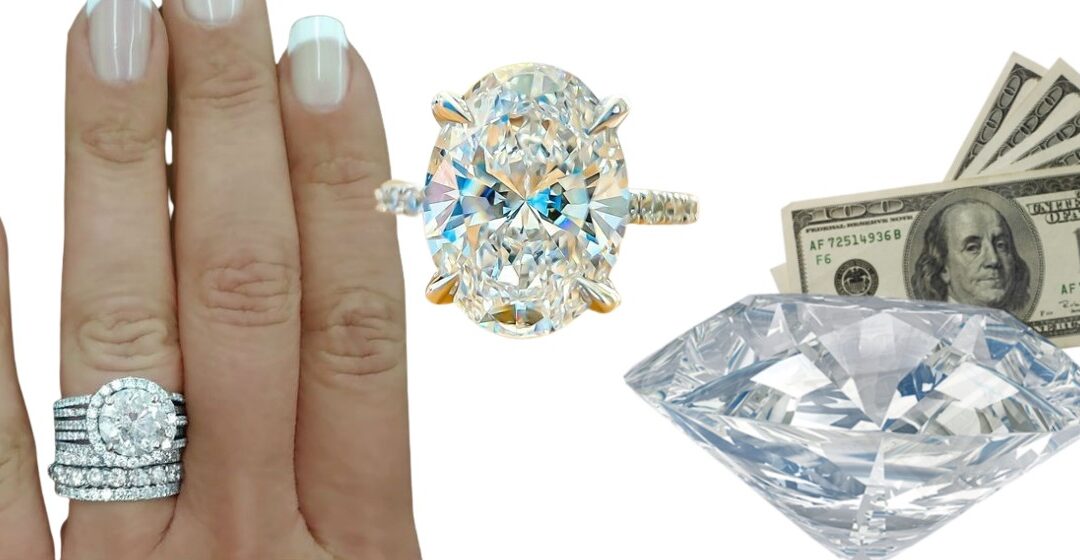
And since lab grown stones are typically more affordable—often 30–40% less than mined equivalents—you can stretch your budget further. Maybe you’ll go for a larger carat size, a higher clarity, or save the difference for your honeymoon.
Either way, it’s about freedom of choice, and that’s something luxury should always be about.
A Touch of Science and a Lot of Patience
When I first visited a lab diamond facility in Melbourne a few years ago, I’ll admit—I was sceptical. I pictured white coats, cold machines, and sterile glass walls.
What I found instead was oddly poetic.
Rows of reactors hummed quietly as carbon atoms crystallised under intense heat and pressure. It was science, sure, but also art. Each diamond grew slowly, layer by layer, forming under conditions carefully monitored by technicians who spoke about the process the way a winemaker talks about their vineyard.
These aren’t mass-produced trinkets. Each stone still takes weeks—sometimes months—to form. They’re cut and polished by hand, just like mined diamonds. Every facet, every sparkle, still relies on human skill and artistry.
That blend of precision and patience is what gives these stones their soul. It’s what convinced me that lab grown diamonds deserve to be called “real.”
More Than Just a Trend
Now, I’ll be honest—ethical buzzwords get thrown around a lot these days. “Sustainable,” “eco-friendly,” “conflict-free”—they’re on half the jewellery websites out there. But in the case of lab created diamonds, the claims actually hold weight.
Mining a single carat of diamond can involve moving hundreds of tonnes of earth. It consumes significant water and energy and leaves lasting ecological scars. Lab creation, by comparison, uses far less energy (especially when powered by renewables) and has a much smaller carbon footprint.
Then there’s the social side. With lab diamonds, you’re not indirectly contributing to human rights issues or uncertain labour practices. The production is traceable, transparent, and often local—something many Australians appreciate.
That’s why many jewellers here are proudly offering both mined and lab options side by side. It’s not about one replacing the other—it’s about giving people informed choice.
The Shift in Perception
I remember interviewing a Sydney jeweller last year who told me that five years ago, he wouldn’t have touched lab diamonds. “They were seen as gimmicky,” he said. “Now, they’re half my business.”
He wasn’t exaggerating. Demand for lab created stones has skyrocketed, especially among younger buyers. Millennials and Gen Z shoppers are leading the charge, drawn by the sustainability angle, but also by the value and transparency.
And here’s the kicker: luxury houses are following suit. Brands once rooted in mining exclusivity are quietly adding lab-grown lines. Celebrities have started wearing them on red carpets. What used to be considered an alternative is now simply another choice—one that feels refreshingly modern.
Investing in the Future (and a Bit of Sparkle)
I’m often asked whether lab grown diamonds make good investments. And to be fair, they don’t appreciate like mined diamonds traditionally might—mainly because the supply isn’t limited in the same way.
But here’s the thing: most people aren’t buying diamonds as financial assets. They’re buying them for emotional reasons—for love, celebration, self-expression.
So maybe the better question is: what kind of investment are you making?
When you choose a lab grown stone, you’re investing in innovation, ethics, and progress. You’re backing an industry that’s redefining what luxury means in the 21st century. That feels like a pretty good return to me.
Pairing Modern Values with Classic Beauty
One thing I love about the shift toward lab grown gems is how seamlessly they fit into modern fashion.
Today’s consumers mix high and low, designer and thrifted, ethical and experimental. It’s not about old-school notions of wealth—it’s about intention and authenticity.
I recently wrote a style feature exploring five ways to look like a celebrity without spending a fortune. Interestingly, one of the tips included incorporating sustainable statement pieces, like lab grown diamonds. They bring the same dazzle as traditional diamonds but with a story that feels current and conscious.
Imagine pairing a sleek lab diamond pendant with a linen jumpsuit, or stacking delicate rings for a layered, modern look. It’s timeless beauty meeting everyday wearability—and that’s a trend I don’t see fading anytime soon.
Choosing the Right Lab Created Diamond
If you’re thinking about buying one, treat it the same way you would a mined diamond. Focus on the 4Cs—cut, colour, clarity, and carat—but don’t get too lost in the numbers.
Ask questions. Request certification. Reputable jewellers will always provide details from respected labs like IGI or GIA, and they’ll be transparent about the diamond’s origins and grading.
And most importantly—trust your eyes.
Sometimes, the most “perfect” stone on paper doesn’t speak to you the way another does. There’s still something deeply emotional about choosing the one that catches your heart, not just the light.
So, Where Does This Leave Us?
Honestly, I think we’re standing at a fascinating crossroads.
Luxury is no longer about scarcity—it’s about story. It’s about craftsmanship, integrity, and personal meaning. Loose lab created diamonds embody all of that. They represent a quiet revolution in how we define value, beauty, and responsibility.
As someone who’s spent years immersed in this world, I find it refreshing. For the first time in a long while, we’re seeing technology and tradition coexist—science enhancing art, not replacing it.
And maybe that’s the real brilliance here.
Because at the end of the day, a diamond—whether it grew beneath the earth or inside a lab—will always be more than carbon. It’s a symbol. Of love, of choice, of evolution. And that, I think, is worth celebrating.